




Skip to content
Anexet
Product
Solutions
Features
Company
Services

Patient Data Protection

On-premises control over how patient records and medical data move, with a full audit trail and no vendor access.

Schedule a Demo
Anexet console auditing access to patient records in a healthcare organization

Guarding patient data in a connected care environment

Care teams touch the most sensitive data there is: diagnoses, lab results, insurance and billing details, signed consent forms, and scanned referrals. That data passes through clinical email, shared drives, cloud folders, USB sticks, and the print room every shift.

Anexet runs entirely on-premises — the vendor never sees a single record — and monitors those channels on each endpoint, so you can see how PHI is used, prove who opened which file, and block transfers that violate policy before data ever leaves the device.

Because access rights are set per role, a front-desk account and a clinician account see different data and trigger different policies, so the same platform can protect a small clinic and a multi-site hospital network without one team seeing another's records.

Where patient data slips out

  • PHI and record leakage

    Patient files, lab reports, and insurance data shared through email, cloud storage, or removable drives — by accident or on purpose.

  • Unaccountable access to records

    Staff with broad permissions opening, copying, or printing charts with no clear, attributable trail of who did what.

  • Scanned and imaged documents

    Consent forms, prescriptions, and referrals that live as images or PDFs and slip past text-only controls.

How Anexet protects patient data

One on-premises platform — data-leak prevention, access auditing, and asset inventory — shaped around how clinical and administrative teams handle records.

  • Lock down the channels records travel through

    Clinical email, 25+ messengers and team chats, web uploads, cloud storage, USB drives, print jobs, and the clipboard are intercepted on the endpoint — so a patient file cannot quietly leave through an unmonitored channel.

  • Prove who accessed which record

    File-operation auditing logs who opened, copied, moved, or printed a record across workstations and shared drives, giving you an attributable answer when an access question comes up.

  • Catch PHI hidden in scans and images

    OCR, including seal and stamp recognition, reads text inside scanned consent forms, prescriptions, and faxed referrals — so imaged documents are screened the same way plain text is.

  • Block sensitive records by content, not just by rule

    Content-aware policies built on digital fingerprints and confidentiality labels stop tagged record sets from being sent out and quarantine violation attempts for a security officer to review.

  • Spot risky behavior before it becomes a breach

    User-behavior analysis flags unusual record access and bulk file activity, while activity monitoring shows which systems and applications each user touched.

  • Investigate incidents with a defensible trail

    Full incident investigations reconstruct what happened from a complete, attributable record — supporting breach review, disciplinary decisions, and regulator inquiries — all from one on-premises console with an optional local AI model.

One on-premises console for the whole care environment

From a single console your security and compliance staff can monitor every endpoint in the organization — front desk, nursing stations, labs, billing, and remote clinicians — with cross-platform agents on Windows, Linux, and macOS.

Because deployment is fully on-premises, every record and every log stays inside your perimeter, and the optional local AI model reviews incidents on-site with nothing sent over the internet.

Role-based access keeps the console itself accountable: administrators see only the endpoints, departments, and record types their role covers, so oversight of PHI doesn't require handing every reviewer the same broad view.

Anexet dashboard summarizing PHI activity across a healthcare organization
Anexet console listing endpoint agents deployed across clinical workstations

Capabilities healthcare teams rely on

This solution draws on a few Anexet capabilities in particular:

A closer look at the consoles your security and compliance teams use to protect patient data day to day.

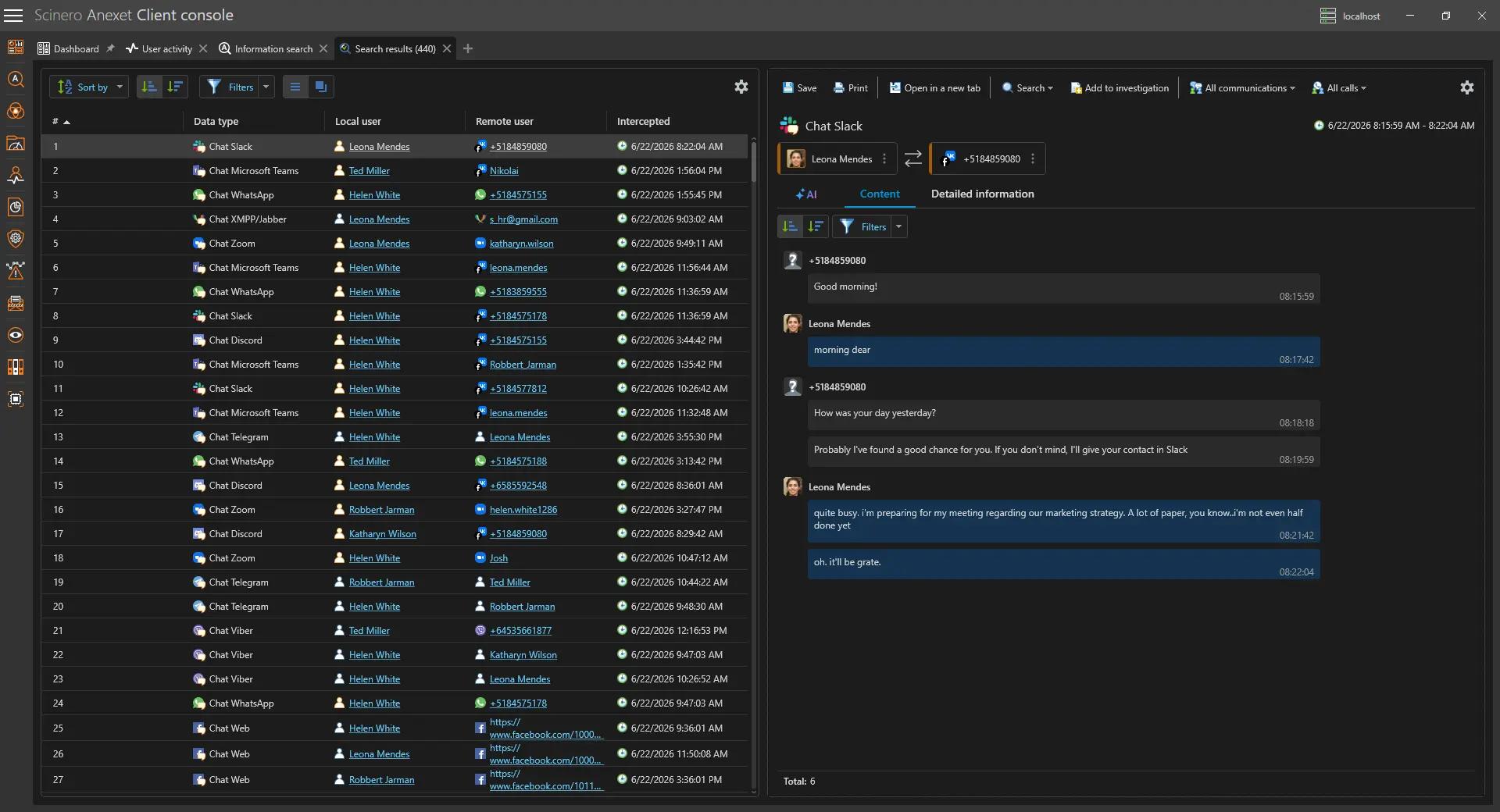
  • Anexet console reviewing intercepted email, messenger, web, and cloud communications

    Review intercepted communications across email, messengers, web, and cloud.

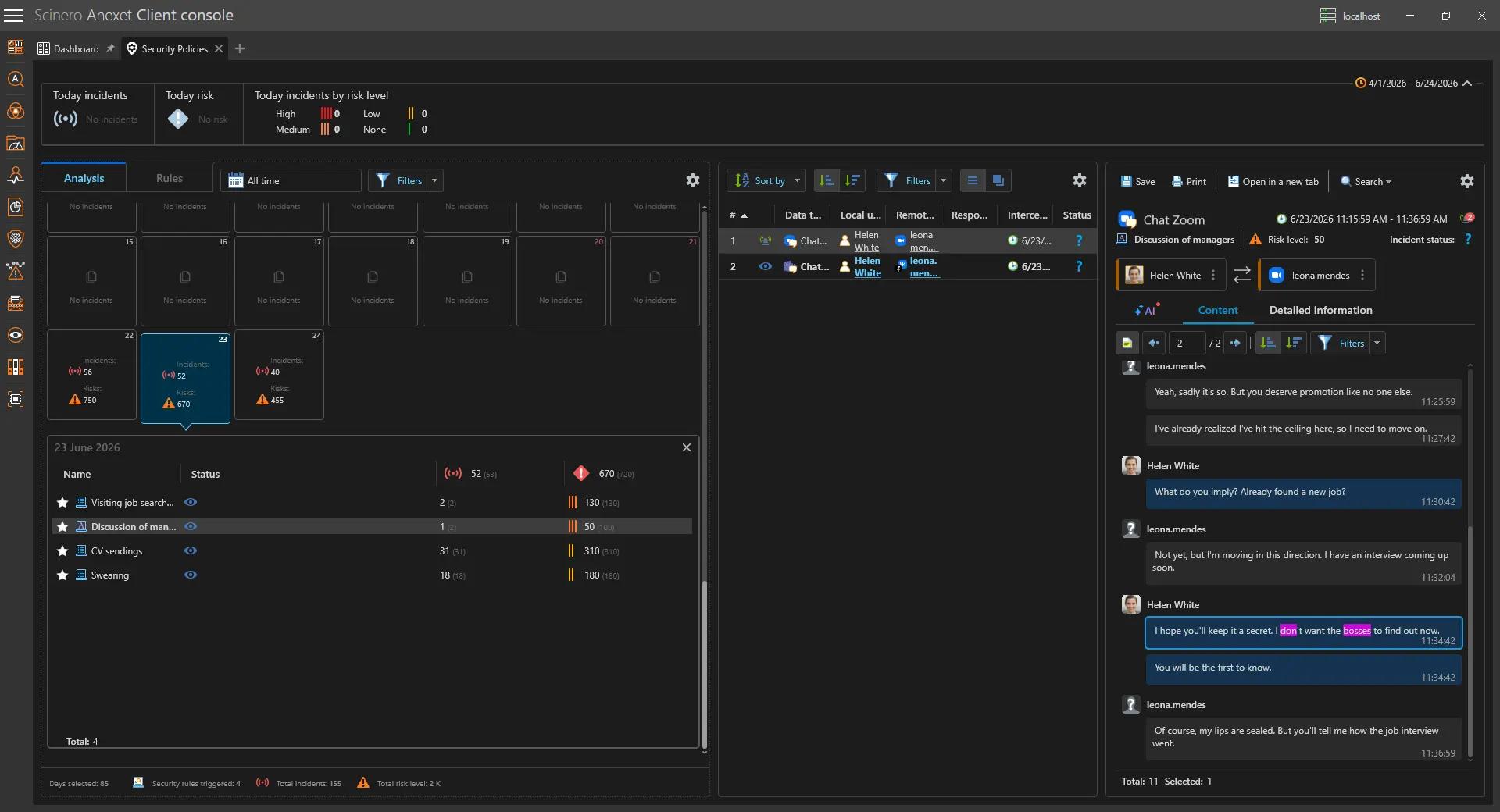
  • Anexet console configuring security policies and automatic risk-based blocking

    Define security policies and risk rules — and block violations automatically.

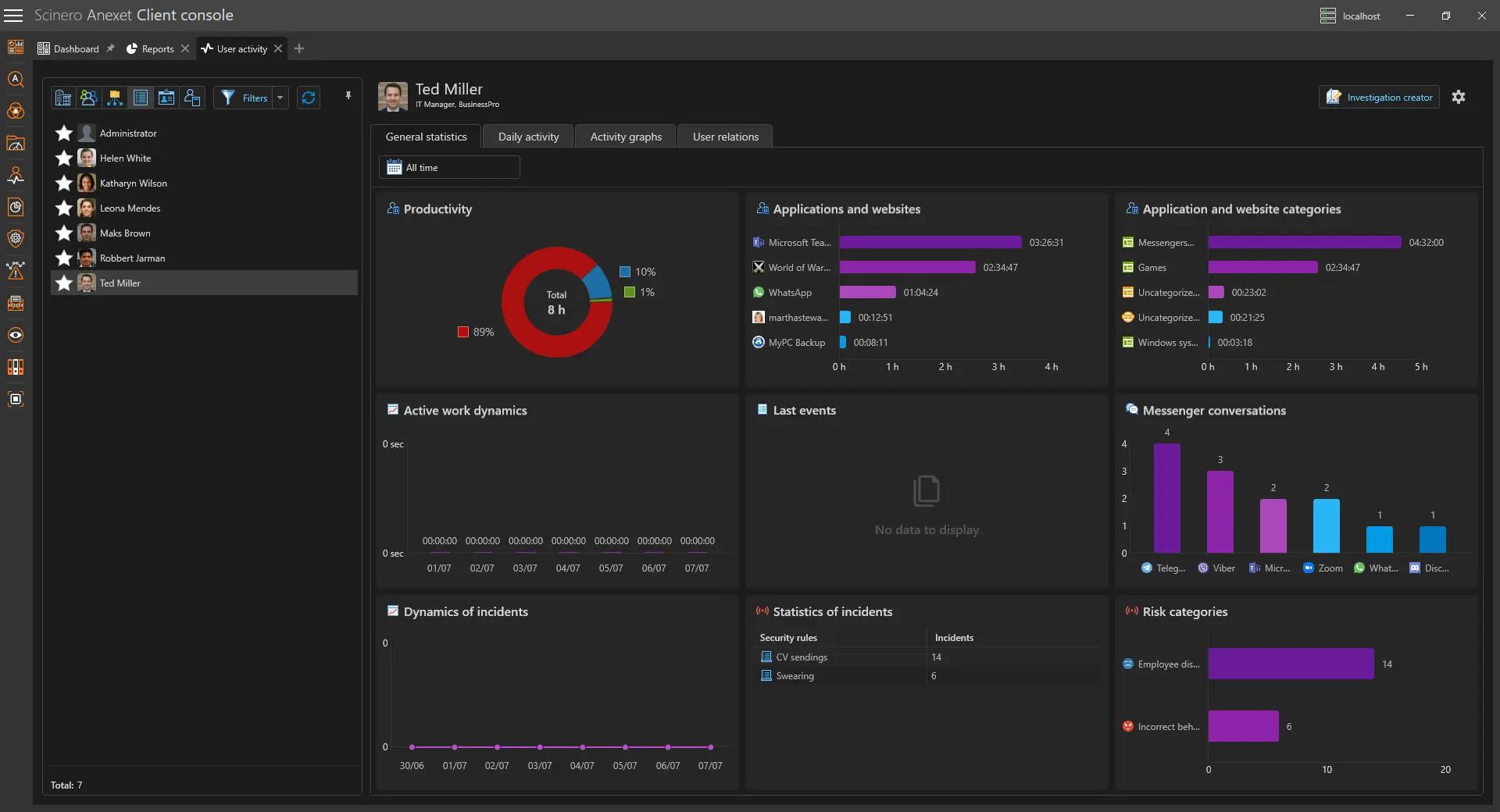
  • Anexet console showing employee activity and productivity across applications and websites

    Monitor employee activity and productivity across applications and sites.

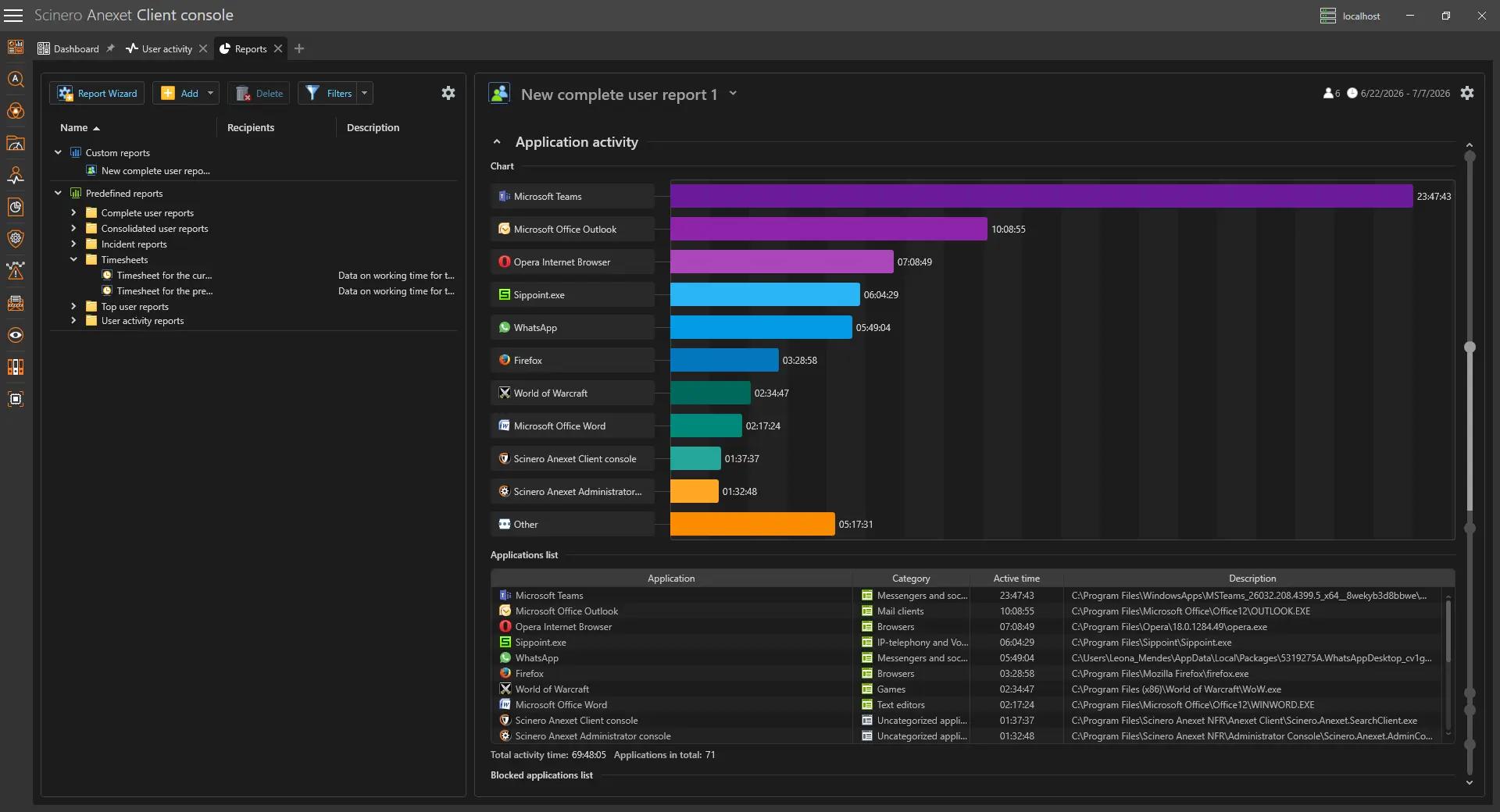
  • Anexet console generating incident reports and dashboards for investigations and audits

    Generate incident reports and dashboards for investigations and audits.

Supports your compliance program

Anexet helps your organization support the patient-privacy and data-protection requirements that apply to healthcare, including:

  • HIPAA
  • GDPR
  • POPIA

Anexet is a compliance-support tool. It is not a certification and does not replace your own legal or audit assessments.

From first call to full control

Getting Anexet to protect your patient data is a short, guided path.

Tell us about your environment, the systems you run, and the privacy rules you are subject to.

1

Deploy on-premises and roll out cross-platform agents to the workstations you choose.

2

Turn on policies for the channels and record types that matter most in care delivery.

3

Monitor access, get alerted, investigate incidents, and refine rules as you scale.

4

Tell us about your environment, the systems you run, and the privacy rules you are subject to.

1

Deploy on-premises and roll out cross-platform agents to the workstations you choose.

2

Turn on policies for the channels and record types that matter most in care delivery.

3

Monitor access, get alerted, investigate incidents, and refine rules as you scale.

4

Arrow

Healthcare protection by plan

StandardCore employee activity monitoring.
Network traffic interception
USB control
Printer monitoring
Messenger interception
Browser interception
and 4 more
Most popular
AdvancedAdds DLP and deeper visibility.
Standard plan included
DLP features
Network share monitoring
Keylogger
Webcam pictures
and 4 more
All-in-one
PremiumAll-in-one solution.
Standard + Advanced plans included
Advanced search (digital fingerprints, hash search)
File system monitoring
User relationship analysis
Risk analysis
and 6 more

Healthcare FAQ

Common questions about using Anexet to protect patient records and PHI.

How does Anexet help protect patient records and PHI?

Anexet watches how PHI — charts, lab results, insurance and billing data, scanned consent forms — moves across email, messengers, the web, cloud storage, USB, print, and the clipboard, and can block transfers that break your policies before the data leaves the endpoint.

Yes. File-operations auditing logs who opened, copied, moved, or printed records across workstations and shared drives, and incident investigations give your team a complete, attributable trail to act on.

Yes. Access and administrator rights are configured per role, so a front-desk user and a clinician can see different data and trigger different policies, instead of every reviewer sharing one broad view of patient records.

Anexet helps your organization support requirements such as HIPAA, GDPR, and POPIA by controlling how records move, auditing access, and producing incident reports. Anexet itself is not a certification and does not replace your legal or audit assessment.

Anexet is deployed on-premises inside your own perimeter, so records and logs never leave your facility. The vendor has no access to your data, and an optional on-prem AI model analyzes incidents locally, with nothing sent over the internet.

Pricing is available on request. Tell us your environment and the number of endpoints, and we will recommend the right plan — Standard, Advanced, or Premium.

Three professionals collaborating and looking at a tablet in a meeting

Protect your patient data with Anexet

Tell us about your organization and environment — we will recommend the right plan and walk you through a tailored demo.

I accept that my personal data can be processed in accordance with the Privacy Policy