Rogue & Unauthorized Device Detection

Anexet detects devices that do not belong to your approved hardware configuration — unknown machines, unauthorized peripherals, and non-functioning endpoints — and surfaces them in the Client Console. Available in the Premium plan. Deployed on-premise; the vendor has no access to your data.

Schedule a Demo
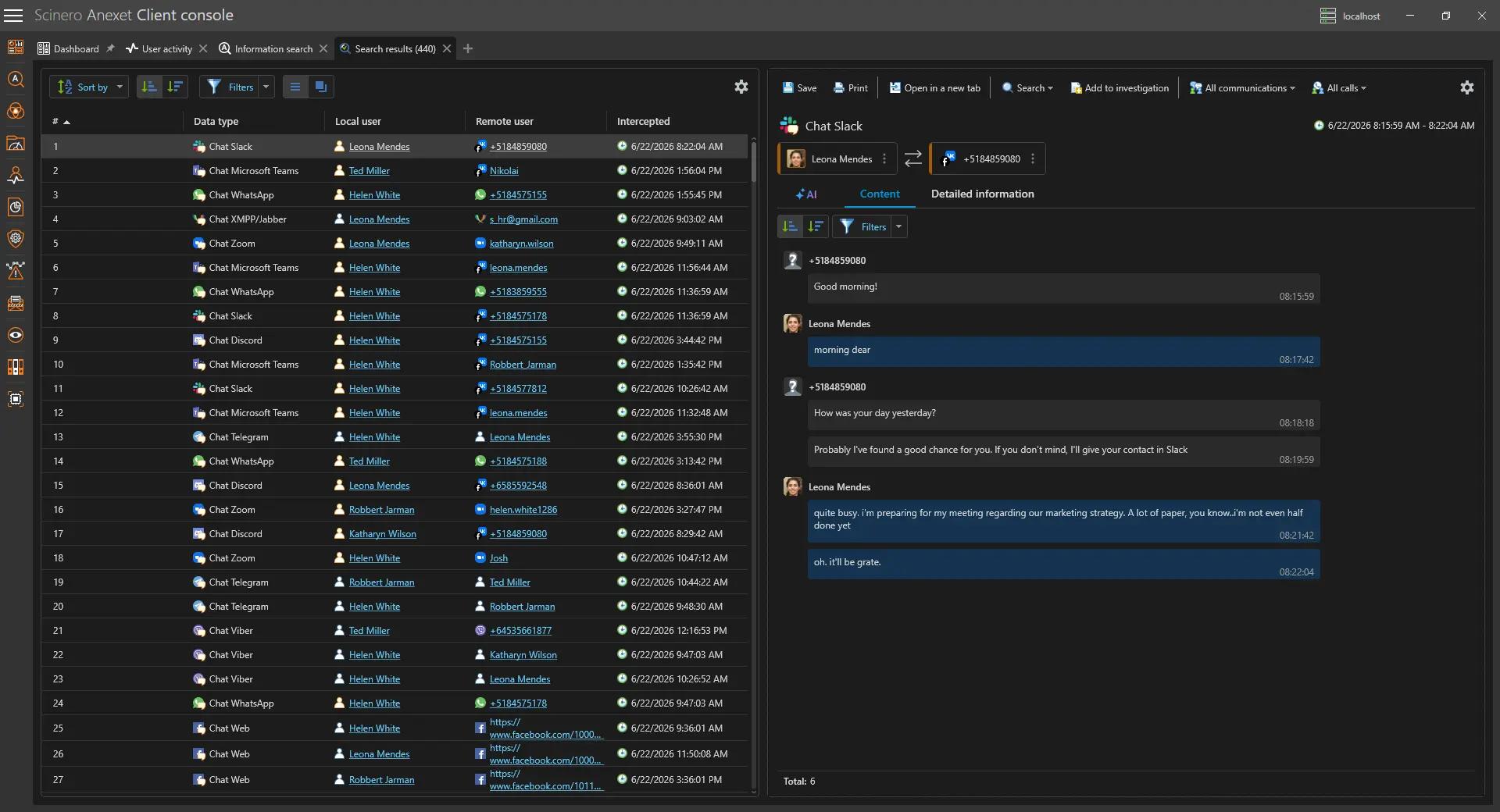
Anexet Client Console showing hardware inventory and rogue device alerts

Every Unauthorized Device Is an Open Door

A personal laptop in a conference room, a rogue switch installed without a change ticket, a long-inactive workstation still on the books — each one widens the attack surface and corrupts the asset count auditors rely on.

Traditional asset discovery is a periodic event: someone runs a scan, exports a spreadsheet, and the data is already stale by the time it reaches the security team. Devices appear and disappear between scans; configurations drift between reviews. By the time a rogue machine is found manually, it may have been sitting on the network for weeks.

Rogue and unauthorized device detection in Anexet is continuous and agent-assisted. Because Anexet already collects hardware inventory from every managed endpoint, the system knows exactly what is approved — and raises an alert the moment something falls outside that baseline.

IT security teams catch unauthorized hardware in real time; IT operations keep their estate records accurate; auditors get a trustworthy configuration baseline on demand.

Why it matters

  • Continuous, not periodic

    Detection runs in real time against the approved baseline — not on a quarterly scan schedule.

  • Agent-assisted accuracy

    The same agent that monitors activity collects hardware inventory, so the baseline is always current.

  • On-premise, no vendor access

    All device records and alerts stay inside your infrastructure. The vendor never sees your data.

Hardware Detection Capabilities

All capabilities are part of the Hardware & Software feature set, included exclusively in the Premium plan.

Device detection & alerting

  • Unknown / unauthorized device alerts

    Premium

    Compares each connected device against the approved configuration baseline and notifies the security console when an unrecognized device is found.

  • Non-functioning device alerts

    Premium

    Endpoints that fail to report or fall outside expected operational parameters are flagged as inoperative, preventing ghost assets from inflating inventory counts.

  • Attack-surface reduction

    Premium

    Continuous detection shrinks the window between a rogue device appearing and the team acting, reducing unauthorized-access exposure from unmanaged hardware.

Configuration & compliance

  • Configuration-compliance verification

    Premium

    Hardware configuration of each workstation, laptop, and server is compared against the approved spec. Deviations — added, removed, or replaced components — appear as compliance exceptions in the console.

  • Peripheral and device component tracking

    Premium

    Monitors, multimedia devices, keyboards, network adapters, portable devices, CPU, RAM, disk drives, and power supplies are all tracked per endpoint for granular component-level visibility.

  • PC, laptop, and server coverage

    Premium

    Full estate scope: desktops, notebooks, and servers are all enrolled in the inventory baseline against which rogue detection runs.

Visualization & audit

  • Office map visualization

    Premium

    Detected devices are placed on the office map in the Client Console, so the physical location of an unauthorized device can be traced quickly by the IT security or operations team.

  • IT-asset audit support

    Premium

    The same device data that powers rogue detection feeds inventory reports, giving auditors and compliance officers a verified hardware baseline ready for review.

All detection capabilities require the Premium plan. Our team confirms the exact scope for your environment during the demo.

Continuous Detection, On-Premise

The Anexet agent on each managed endpoint continuously reports its hardware state — installed components and connected peripherals — to the on-premise Inventory Server. Any device that appears outside the enrolled baseline is flagged immediately in the Client Console, with the physical location shown on the office map so the IT team can act without a manual walkthrough.

All device records, alerts, and configuration baselines are stored inside your infrastructure. Anexet is deployed on-premise; the vendor has no access to your data. There is no cloud sync, no external telemetry, and no dependency on the vendor's availability.

Hardware inventory and device alerts in the Anexet Client Console
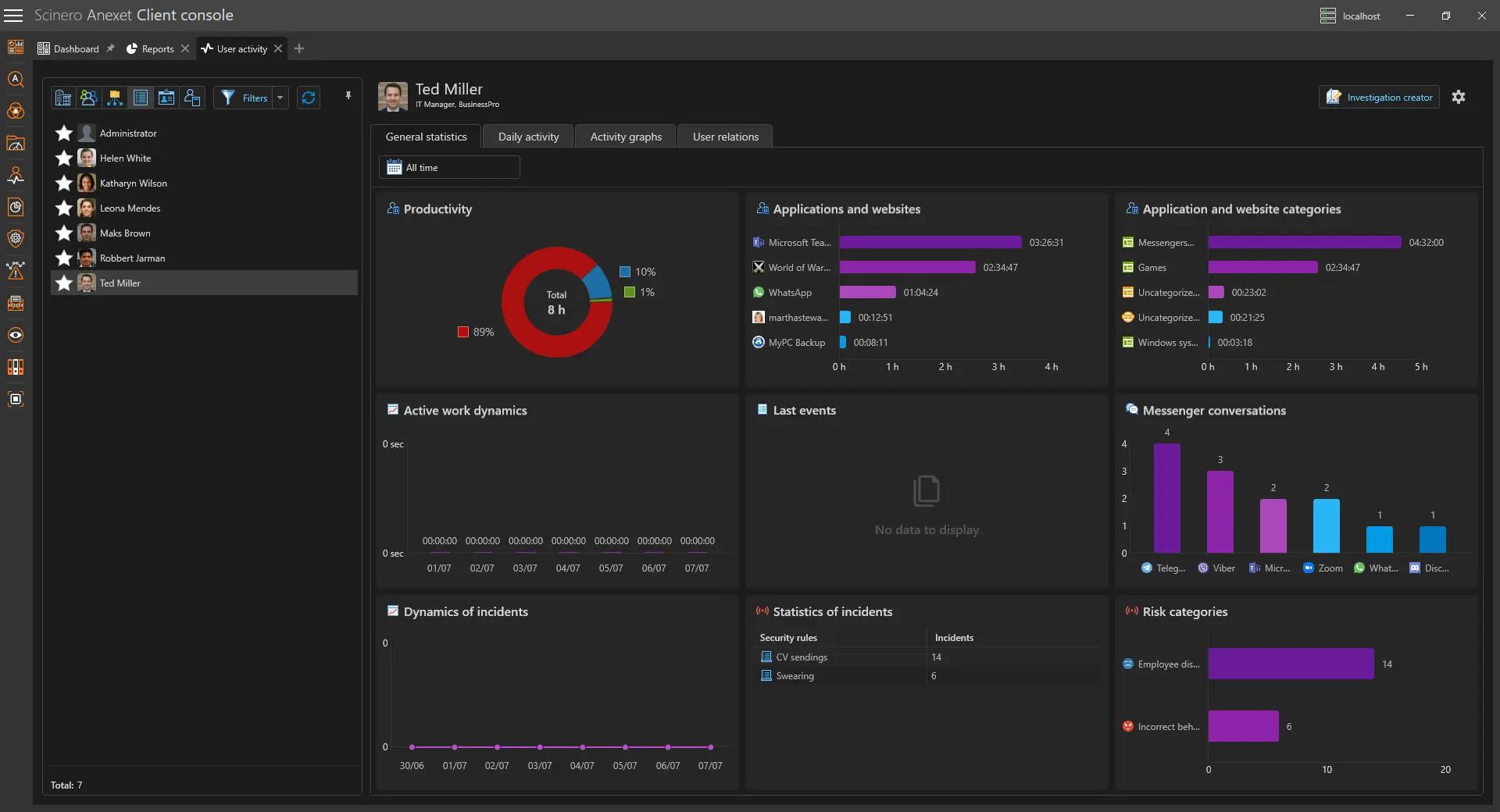
Office map visualization of detected devices in Anexet

How Rogue Device Detection Works

Four steps from endpoint enrollment to a verified, audit-ready hardware baseline.

Baseline enrollment: the Anexet agent collects a full hardware inventory from each managed endpoint — the machine itself, installed components, and connected peripherals — creating the approved configuration record in the Client Console.

1

Continuous comparison: the on-premise Inventory Server compares reported hardware states against the approved baseline; any device or component that falls outside the enrolled set is flagged immediately.

2

Alert and visualization: the Client Console surfaces unauthorized and non-functioning devices as alerts in the Hardware & Software section, with the office map pinpointing the physical location of each anomaly.

3

Audit and remediation: security and IT operations teams review flagged device records, compare against change-management logs, mark as approved or initiate removal, and retain all device events on-premise as an audit trail.

4

Baseline enrollment: the Anexet agent collects a full hardware inventory from each managed endpoint — the machine itself, installed components, and connected peripherals — creating the approved configuration record in the Client Console.

1

Continuous comparison: the on-premise Inventory Server compares reported hardware states against the approved baseline; any device or component that falls outside the enrolled set is flagged immediately.

2

Alert and visualization: the Client Console surfaces unauthorized and non-functioning devices as alerts in the Hardware & Software section, with the office map pinpointing the physical location of each anomaly.

3

Audit and remediation: security and IT operations teams review flagged device records, compare against change-management logs, mark as approved or initiate removal, and retain all device events on-premise as an audit trail.

4

Arrow

Rogue Device Detection by Plan

StandardCore employee activity monitoring.
Network traffic interception
USB control
Printers monitoring
Messengers interception
Browsers interception
and 4 more
Includes:
Anexet Activity
Most popular
AdvancedAdds DLP and deeper visibility.
Standard plan included
DLP features
Network shares monitoring
Keylogger
Webcam pictures
and 4 more
Includes:
Anexet DLP
Anexet Activity
All-in-one
PremiumAll-in-one solution.
Standard + Advanced plans included
Advanced search (digital fingerprints, hash search)
File systems monitoring
User relations analysis
Risk analysis
and 6 more
Includes:
Anexet DLP
Anexet Inventory
Anexet Activity
Anexet Ultimate

Frequently Asked Questions

Common questions about rogue and unauthorized device detection in Anexet.

What is rogue device detection and why does it matter?

Rogue device detection identifies hardware on your network or estate that is not part of the approved inventory baseline — unknown machines, unauthorized peripherals, or equipment installed without a change ticket. Every unmanaged device is a potential entry point for attackers or a compliance gap for auditors. Continuous detection closes that gap faster than periodic manual scans.

No. Rogue and unauthorized device detection is part of the Hardware & Software module, which is included exclusively in the Premium plan. Standard provides core employee activity monitoring; Advanced adds DLP capabilities; Premium is the all-in-one plan that adds Inventory and the full Anexet Ultimate feature set.

Anexet is deployed on-premise; the vendor has no access to your data. All inventory records, device alerts, and configuration baselines are stored inside your infrastructure and never leave your environment.

Anexet tracks the full hardware estate: PCs, laptops, and servers as top-level assets, plus monitors, multimedia devices, keyboards, network adapters, portable devices, CPU, RAM, disk drives, and power supplies at the component level. Any device or component that does not match the approved configuration baseline is surfaced as an exception.

IT asset inventory is the broader capability that records what hardware exists and its configuration. Rogue device detection is the security-oriented layer on top: it compares the live estate against the approved baseline and raises an alert when something is out of place. Both are part of the same Hardware & Software module in the Premium plan and share the same data — the distinction is the intent and the audience (IT-security and compliance vs. IT operations).

Configuration-compliance verification — comparing each endpoint's installed components against the approved spec — is part of the Hardware & Software module, available in the Premium plan.

Three professionals collaborating and looking at a tablet in a meeting

Find Every Unauthorized Device on Your Estate

Tell us about your hardware environment and compliance requirements — we'll show you how Anexet Premium detects rogue devices and keeps your IT audit baseline accurate.

I accept that my personal data can be processed in accordance with the Privacy Policy