Block Data Transfers Across Channels

Anexet blocks outbound data transfers the moment a rule matches — before the file leaves the endpoint. It covers HTTP uploads, SMTP and MAPI email, FTP, XMPP, USB and removable drives, printers, clipboard, messenger file transfers, and screenshot capture. Blocking Policies are available from the Advanced plan. Anexet is deployed on-premise; the vendor has no access to your data.

Schedule a Demo
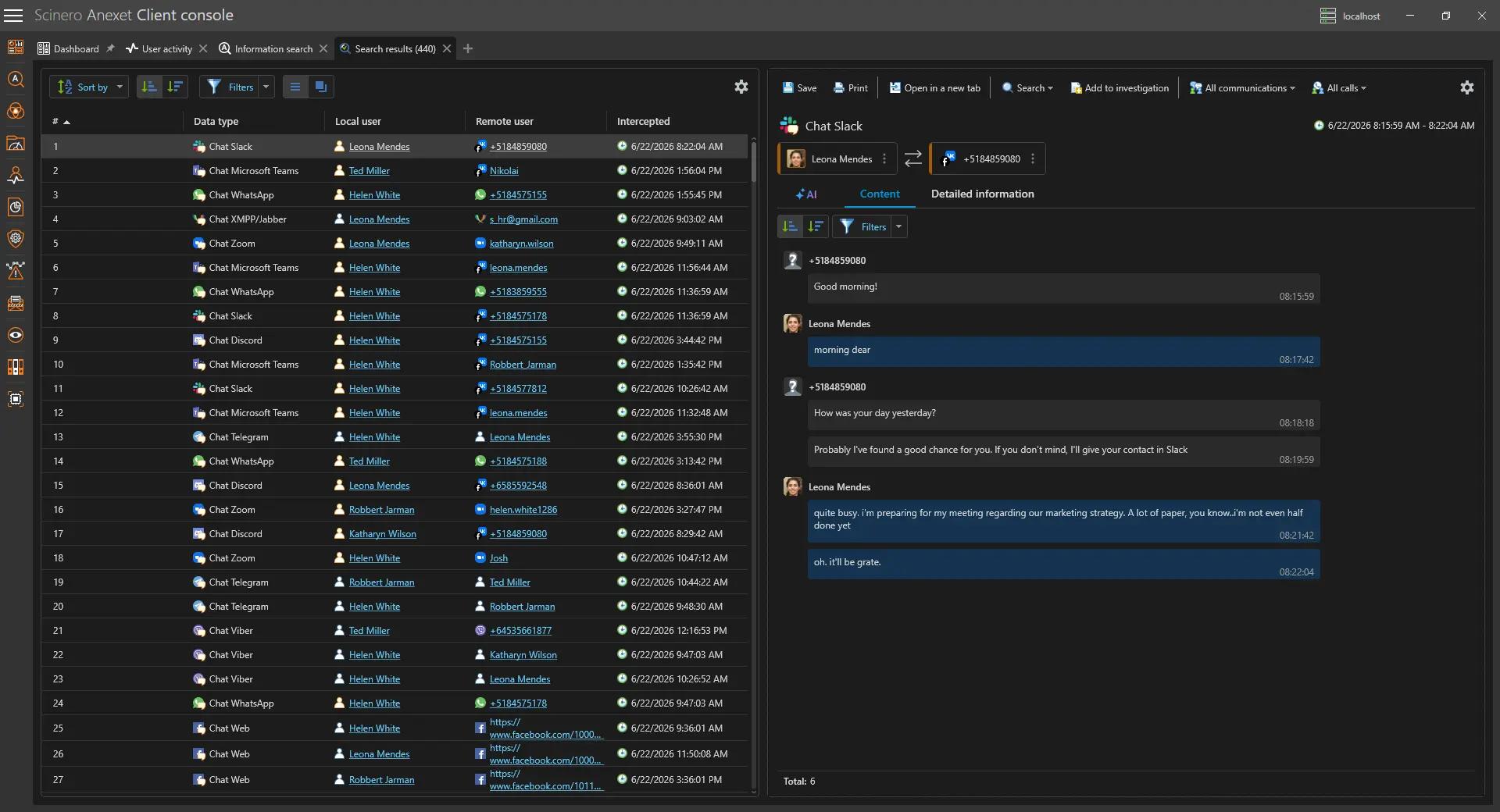
Anexet Client Console showing Blocking Policies and Mail Quarantine

Stop Transfers Before the Data Leaves

Every data leak starts with a transfer — and Blocking Policies stop it mid-flight, before the file reaches its destination.

Every data leak starts with a transfer: an attachment sent to a personal inbox, a file dropped onto a USB drive, a screenshot uploaded to a cloud service. By the time your team notices, the data is already outside the perimeter. Blocking Policies in Anexet stop that transfer mid-flight — the send is cancelled, the event is logged, and the security officer receives an alert.

Unlike monitoring-only tools, Blocking Policies move from visibility to enforcement. You configure a rule — for a protocol, device, or content type — and the endpoint agent enforces it silently in the background. Employees see nothing unusual until a blocked action triggers a notification. The incident record in the Client Console shows exactly who tried to send what, over which channel, and at what time.

Because Anexet runs entirely on-premise, the blocking engine operates inside your network without routing traffic through any external service. The vendor has no visibility into your rules, your data, or your blocked events.

Why it matters

  • Blocked at the endpoint

    The send is cancelled before the file reaches its destination — not logged after the fact.

  • Full channel coverage

    HTTP, email, USB, printers, clipboard, messengers, and screenshots are all covered by a single policy engine.

  • Evidence and response in one place

    Every blocked event is recorded as an incident; blocked emails enter Mail Quarantine for review and release.

What Anexet Blocks — Verified by Channel

All Blocking Policies capabilities below are confirmed on the Advanced plan (and carried into Premium). None are available on Standard.

Network protocol blocking

  • HTTP / HTTPS uploads

    Advanced

    Block outbound file and form submissions to any web destination, including cloud storage portals, webmail, and file-sharing sites.

  • SMTP email

    Advanced

    Outbound messages are stopped at the agent before delivery; blocked emails move to Mail Quarantine for review and release.

  • MAPI

    Advanced

    Internal and Microsoft Exchange email is covered alongside SMTP, closing the gap for corporate mail environments.

  • FTP

    Advanced

    Block file transfers over FTP regardless of destination.

  • XMPP

    Advanced

    Block file and message transfers over Jabber-based messaging protocols.

Endpoint and device blocking

  • USB and removable drives

    Advanced

    Any attempt to copy a file to a USB stick, external drive, or removable storage device can be blocked by policy.

  • Printing

    Advanced

    Block print jobs on both local and network printers; the job is stopped before it prints.

  • Clipboard

    Advanced

    Block copy-paste transfers of sensitive content between applications or to external destinations.

  • Process network traffic

    Advanced

    Block outbound network connections for specific processes, preventing an application from sending data regardless of the protocol it uses.

Application-level blocking

  • Messenger file transfers

    Advanced

    Block file attachments sent through desktop messenger clients — WhatsApp, Telegram, Teams, Slack, and others — without disabling the messenger itself.

  • Screenshot blocking

    Advanced

    Prevent the creation of screenshots on the endpoint, removing a frequent data-exfiltration workaround.

Premium extends blocking with content-aware matching by digital fingerprint, hash, or sensitivity label — blocking by document identity, regardless of which channel an employee tries to use.

How Blocking Policies Work on the Endpoint

The Anexet endpoint agent runs on each monitored workstation. When a user initiates a transfer that matches an active Blocking Policy — whether that is an HTTP upload, an email with an attachment, a USB copy, or a print job — the agent intercepts it before the data leaves the device. The send is cancelled in real time, an incident record is created, and the security officer is notified immediately.

Because Anexet is deployed entirely on-premise, the blocking engine operates inside your network without routing traffic through any external service. All incident records, Mail Quarantine contents, and policy configurations remain within your infrastructure. The vendor has no access to your data, your rules, or your blocked events.

Blocking Policy configuration in the Anexet Client Console
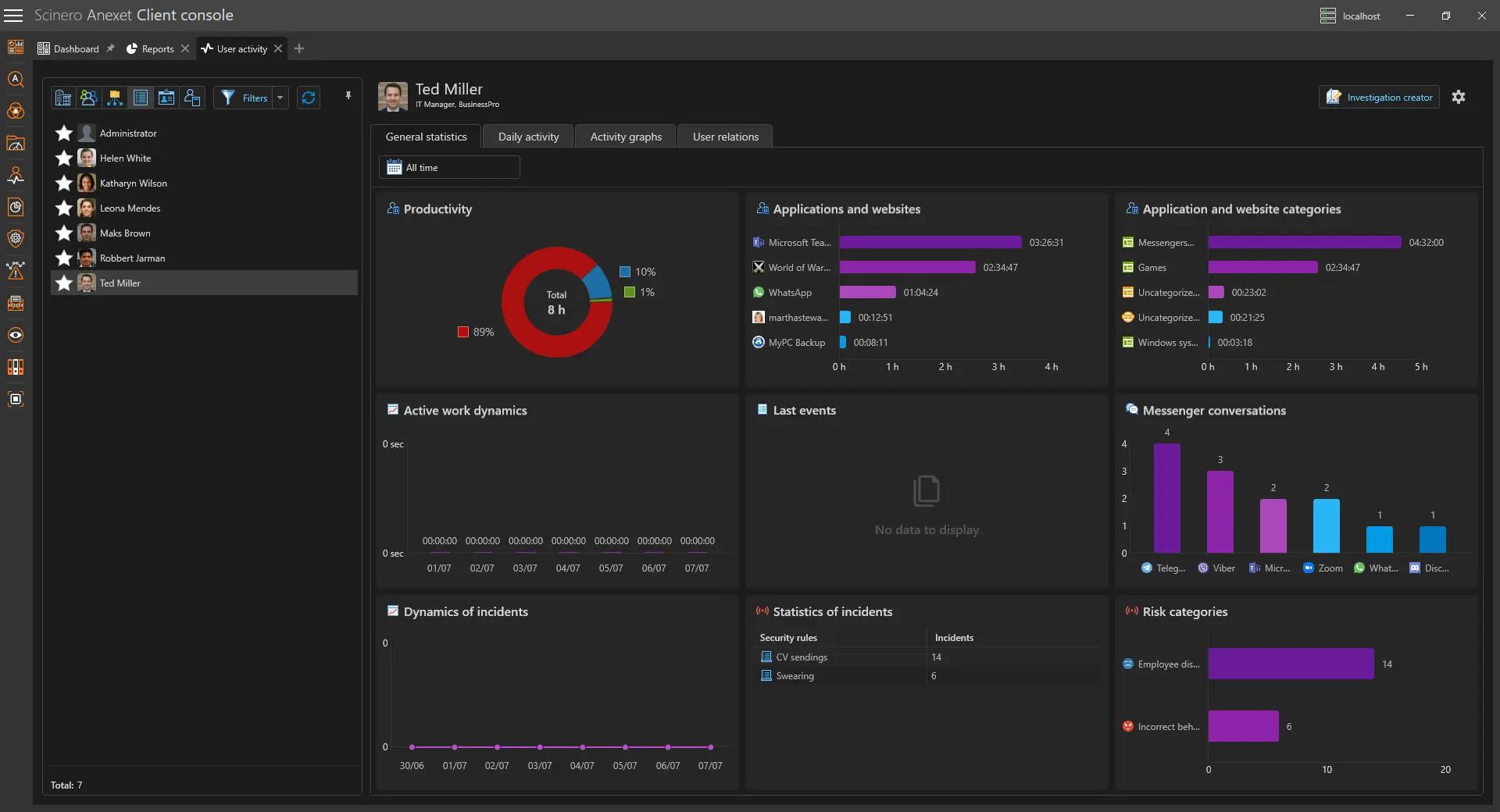
Mail Quarantine review screen in the Anexet Client Console

How Data-Transfer Blocking Works

Four steps from a policy rule to a cancelled transfer and a closed incident.

Configure a Blocking Policy in the Client Console — choose the channel or protocol, set the scope to the relevant user group, and assign a risk level.

1

The endpoint agent enforces the rule in real time: when a user initiates a matching transfer, the send is cancelled before the data leaves the device.

2

Every blocked transfer creates an incident record — user, timestamp, channel, file details — and for SMTP blocks the full message enters Mail Quarantine.

3

The security officer reviews the incident in the Client Console, releases or deletes quarantined mail, and closes or escalates the case.

4

Configure a Blocking Policy in the Client Console — choose the channel or protocol, set the scope to the relevant user group, and assign a risk level.

1

The endpoint agent enforces the rule in real time: when a user initiates a matching transfer, the send is cancelled before the data leaves the device.

2

Every blocked transfer creates an incident record — user, timestamp, channel, file details — and for SMTP blocks the full message enters Mail Quarantine.

3

The security officer reviews the incident in the Client Console, releases or deletes quarantined mail, and closes or escalates the case.

4

Arrow

Blocking Policies by Plan

StandardCore employee activity monitoring.
Network traffic interception
USB control
Printers monitoring
Messengers interception
Browsers interception
and 4 more
Includes:
Anexet Activity
Most popular
AdvancedAdds DLP and deeper visibility.
Standard plan included
DLP features
Network shares monitoring
Keylogger
Webcam pictures
and 4 more
Includes:
Anexet DLP
Anexet Activity
All-in-one
PremiumAll-in-one solution.
Standard + Advanced plans included
Advanced search (digital fingerprints, hash search)
File systems monitoring
User relations analysis
Risk analysis
and 6 more
Includes:
Anexet DLP
Anexet Inventory
Anexet Activity
Anexet Ultimate

Frequently Asked Questions

Common questions about how Anexet Blocking Policies stop outbound data transfers.

Does Anexet block transfers before the data leaves the device?

Yes. The endpoint agent intercepts the transfer at the moment of action — when the file is being sent, copied, or printed — before it reaches the destination. The send is cancelled; the data does not leave the device.

HTTP, SMTP, MAPI, FTP, and XMPP for network transfers; USB and removable drives; local and network printers; clipboard; process-level network traffic; desktop messenger file transfers (WhatsApp, Telegram, Teams, Slack, and others); and screenshot capture. All are available on the Advanced plan.

Anexet is deployed on-premise; the vendor has no access to your data. The blocking engine, all incident records, Mail Quarantine contents, and policy configurations remain entirely within your network.

Blocking Policies are available from the Advanced plan. Standard includes interception and monitoring but does not block transfers. Premium extends blocking with content-aware matching by digital fingerprints, hash, and sensitivity labels.

No. When an SMTP rule blocks an outbound message, it moves into Mail Quarantine inside the Client Console. The security officer can review the message and its attachments, release it to the original recipient if it is legitimate, or delete it. The email is not silently dropped.

Yes. Blocking rules are applied through agent profiles, which map to user groups, departments, or individual workstations. You can run strict blocking policies for high-risk roles while applying lighter monitoring-only rules elsewhere.

Endpoint agents are supported on Windows, Linux, and macOS ARM64. Specific channel coverage varies by operating system; your implementation team will confirm the exact matrix for your environment during the demo.

Three professionals collaborating and looking at a tablet in a meeting

Stop Data Transfers Before They Happen

Tell us which channels you need to control and what data you are protecting — we will map it to the right plan and arrange a demo or a free trial of Anexet Ultimate.

I accept that my personal data can be processed in accordance with the Privacy Policy