On-Screen Watermarks to Deter Photo-of-Screen Leaks

Anexet can overlay a persistent, configurable watermark directly on the monitor of any watched workstation. The watermark activates only in specified applications or web resources, includes user-identifying text, and is designed to deter someone from photographing the screen and to identify the leaker if a photo does surface. Anexet is deployed on-premise; the vendor has no access to your data.

Schedule a Demo
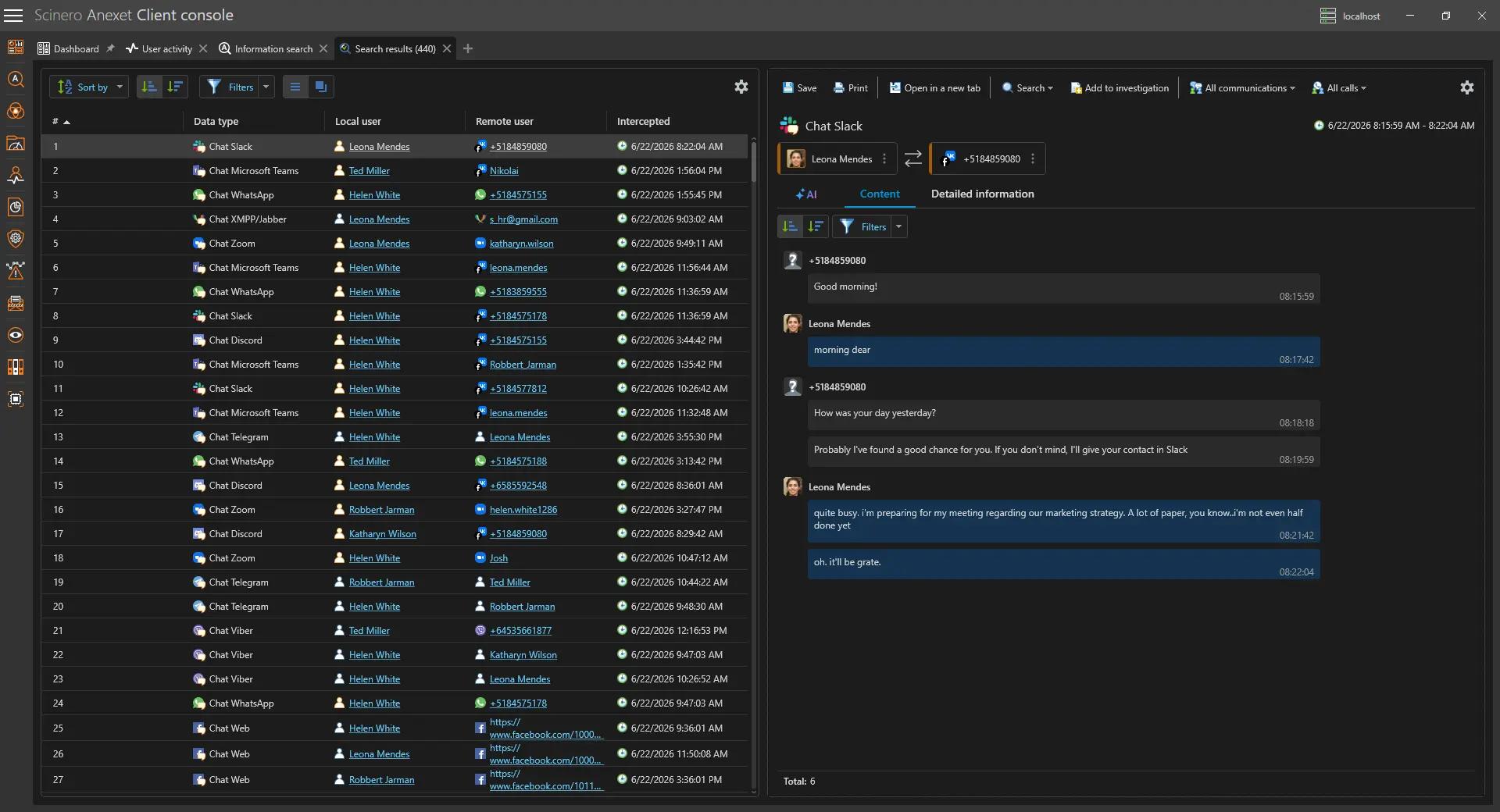
Anexet Client Console showing watermark policy configuration

The Channel Every Perimeter Tool Misses

Every DLP control that blocks uploads and USB transfers still leaves one channel wide open: a smartphone aimed at the monitor.

Every DLP control that blocks uploads, emails, or USB transfers still leaves one channel wide open: a smartphone aimed at the monitor. A contractor opens a confidential pricing sheet, snaps it, and walks out. No file was transferred. No policy fired. The data is gone anyway.

On-screen watermarks address this gap by making the screen itself carry identifying information. When watermarking is active, the security team's chosen text — which can include the employee's username, the date, or any custom string — floats visibly over the working area of designated applications. A photograph of that screen is a photograph of the watermark. The leaker is named in the evidence they create.

Because the watermark is configurable down to its transparency, font, angle, and the exact applications or web addresses where it appears, security teams can deploy it selectively: high-risk users, sensitive document viewers, finance or HR portals — without cluttering the screens of every employee across the organization.

Why it matters

  • Closes the camera gap

    Perimeter and network DLP controls cannot stop a photograph of the screen. A visible watermark addresses this blind spot directly.

  • Self-labelling evidence

    If a photo leaks, the watermark text identifies the user, device, or session — the leaker creates the evidence against themselves.

  • Selective, low-friction deployment

    The overlay activates only in the apps and web resources you specify, so everyday work is unaffected while high-risk contexts stay protected.

On-Screen Watermark Capabilities

The minimum plan tier that includes on-screen watermarks is confirmed during the demo. Ask the Scinero team to verify availability for your chosen plan.

Display and appearance

  • Configurable transparency

    confirmed during the demo

    The overlay is visible enough to survive a phone camera without obstructing the user's work; the security team sets the exact opacity level.

  • Font and tilt control

    confirmed during the demo

    Angle and typeface are adjustable so the watermark is harder to crop or digitally remove from a photograph.

  • User-identifying content

    confirmed during the demo

    The watermark text can include dynamic identifiers such as the logged-in username, making any leaked photograph a self-labelling piece of evidence.

Scope and activation

  • Selective activation

    confirmed during the demo

    The watermark activates only in applications or on web resources specified in the policy; users on standard tasks see an unobstructed screen.

  • Per-profile scoping

    confirmed during the demo

    Watermark rules are assigned to specific agent profiles — groups of users, departments, or individual endpoints — for targeted deployment.

  • Console-managed deployment

    confirmed during the demo

    Watermark policies are configured through the Anexet Client Console alongside other DLP rules; no separate tooling required.

The exact plan tier that includes on-screen watermarks is not listed in the published feature matrix. The Scinero team confirms availability during the demo.

How Watermarks Are Applied on the Endpoint

The Anexet endpoint agent running on the monitored workstation renders the watermark on top of the specified applications the moment they are in focus. The overlay is applied at the display layer; it does not modify the underlying documents or files. The original file remains unchanged — only the rendered image on the monitor carries the watermark.

Anexet is deployed entirely on-premise. All watermark policy configurations, agent deployments, and any incident data remain inside your infrastructure. Scinero Software Limited has no visibility into your organization's data at any time.

DLP policy configuration in the Anexet Client Console
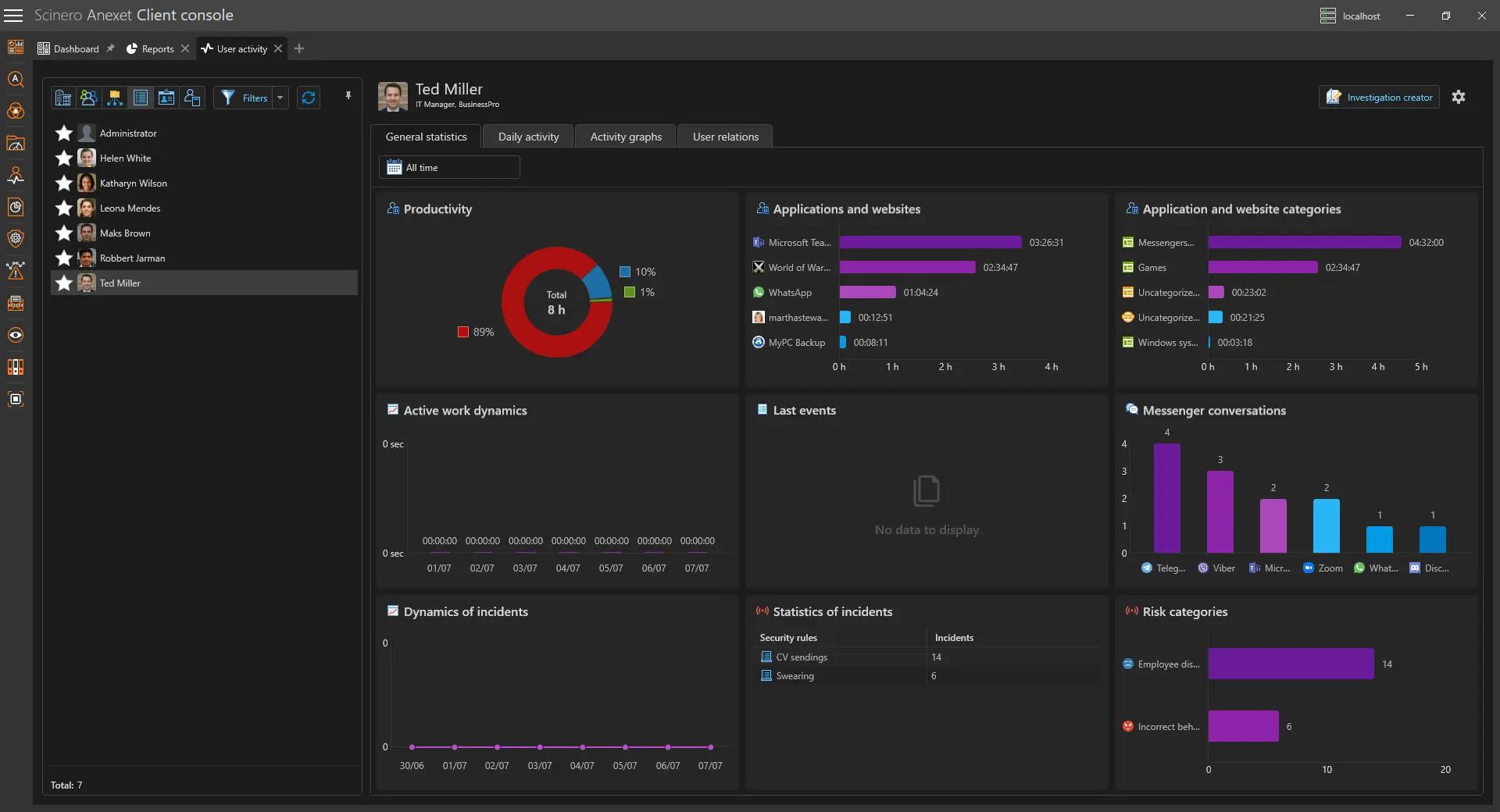
User activity timeline in the Anexet Client Console

How On-Screen Watermarks Work

Four steps from policy configuration to incident response.

The security officer opens the DLP module in the Client Console and creates a watermark rule: sets the display text (static string, dynamic user identifier, or both), chooses transparency, font, and tilt angle.

1

The rule is scoped to one or more agent profiles — specific groups of users, departments, or individual endpoints — and the security team lists the applications and web resources where the overlay will appear.

2

The Anexet endpoint agent renders the watermark on top of the specified applications the moment they are in focus; the overlay does not modify the underlying document or file.

3

If a photograph of the screen circulates, the watermark text identifies the user, the date, or any other token embedded in the policy, enabling the security team to build a full incident timeline in the Client Console.

4

The security officer opens the DLP module in the Client Console and creates a watermark rule: sets the display text (static string, dynamic user identifier, or both), chooses transparency, font, and tilt angle.

1

The rule is scoped to one or more agent profiles — specific groups of users, departments, or individual endpoints — and the security team lists the applications and web resources where the overlay will appear.

2

The Anexet endpoint agent renders the watermark on top of the specified applications the moment they are in focus; the overlay does not modify the underlying document or file.

3

If a photograph of the screen circulates, the watermark text identifies the user, the date, or any other token embedded in the policy, enabling the security team to build a full incident timeline in the Client Console.

4

Arrow

On-Screen Watermarks by Plan

StandardCore employee activity monitoring.
Network traffic interception
USB control
Printers monitoring
Messengers interception
Browsers interception
and 4 more
Includes:
Anexet Activity
Most popular
AdvancedAdds DLP and deeper visibility.
Standard plan included
DLP features
Network shares monitoring
Keylogger
Webcam pictures
and 4 more
Includes:
Anexet DLP
Anexet Activity
All-in-one
PremiumAll-in-one solution.
Standard + Advanced plans included
Advanced search (digital fingerprints, hash search)
File systems monitoring
User relations analysis
Risk analysis
and 6 more
Includes:
Anexet DLP
Anexet Inventory
Anexet Activity
Anexet Ultimate

Frequently Asked Questions

Common questions about on-screen watermarks in Anexet.

What is an on-screen watermark in a DLP context?

An on-screen watermark is a semi-transparent text overlay rendered on a user's monitor by the endpoint agent. It identifies the user or session on the screen itself, so that a photograph taken with a smartphone captures the identifying text alongside the confidential content. In a DLP context it deters photo-of-screen leaks and provides identifying evidence if a leak does occur.

The security officer sets the watermark in the Anexet Client Console: display text (including dynamic tokens such as the logged-in username), transparency level, font, and tilt angle. The rule is then assigned to agent profiles and scoped to specific applications or web resources where it should appear.

No. The security team specifies exactly which desktop applications and web resources trigger the overlay. Outside those scopes, users see a normal, unobstructed screen. This selective activation keeps the watermark meaningful in high-risk contexts without affecting day-to-day work across the organization.

The minimum plan required for on-screen watermarks is not listed in the published feature matrix. Confirm availability during the demo with the Scinero team, who will verify the capability against your chosen plan.

No. The overlay is applied at the display layer by the endpoint agent and does not alter the underlying document, file, or application data. The original file remains unchanged; only the rendered image on the monitor carries the watermark.

Anexet is deployed on-premise; the vendor has no access to your data. All intercepted communications, policy configurations, and watermark rules remain inside your infrastructure. Scinero Software Limited has no visibility into your organization's data at any time.

Deploying on-screen watermarks can support internal data handling policies by making confidential information harder to leak via photography and by creating a deterrence layer for users with access to sensitive materials. Anexet helps comply with internal security policies and relevant regulatory frameworks; it is not itself a certification.

Three professionals collaborating and looking at a tablet in a meeting

Add a Watermark Layer to Your DLP Strategy

Tell us about the sensitive applications and user groups you need to protect — we'll map the watermark capability to the right plan and arrange a demo or a free trial of Anexet Ultimate.

I accept that my personal data can be processed in accordance with the Privacy Policy