The Invisible Shift: Why Remote Work Changes the Risk Profile
When employees work from home, physical oversight disappears — but the endpoint remains, and it can tell you where it is and what network it's talking to.
When employees work from the office, IT and HR can observe behavior through physical proximity, shared systems, and team lead oversight. When those same employees work from home, that context disappears. The endpoint remains — but visibility does not, unless the monitoring system lives on the device itself.
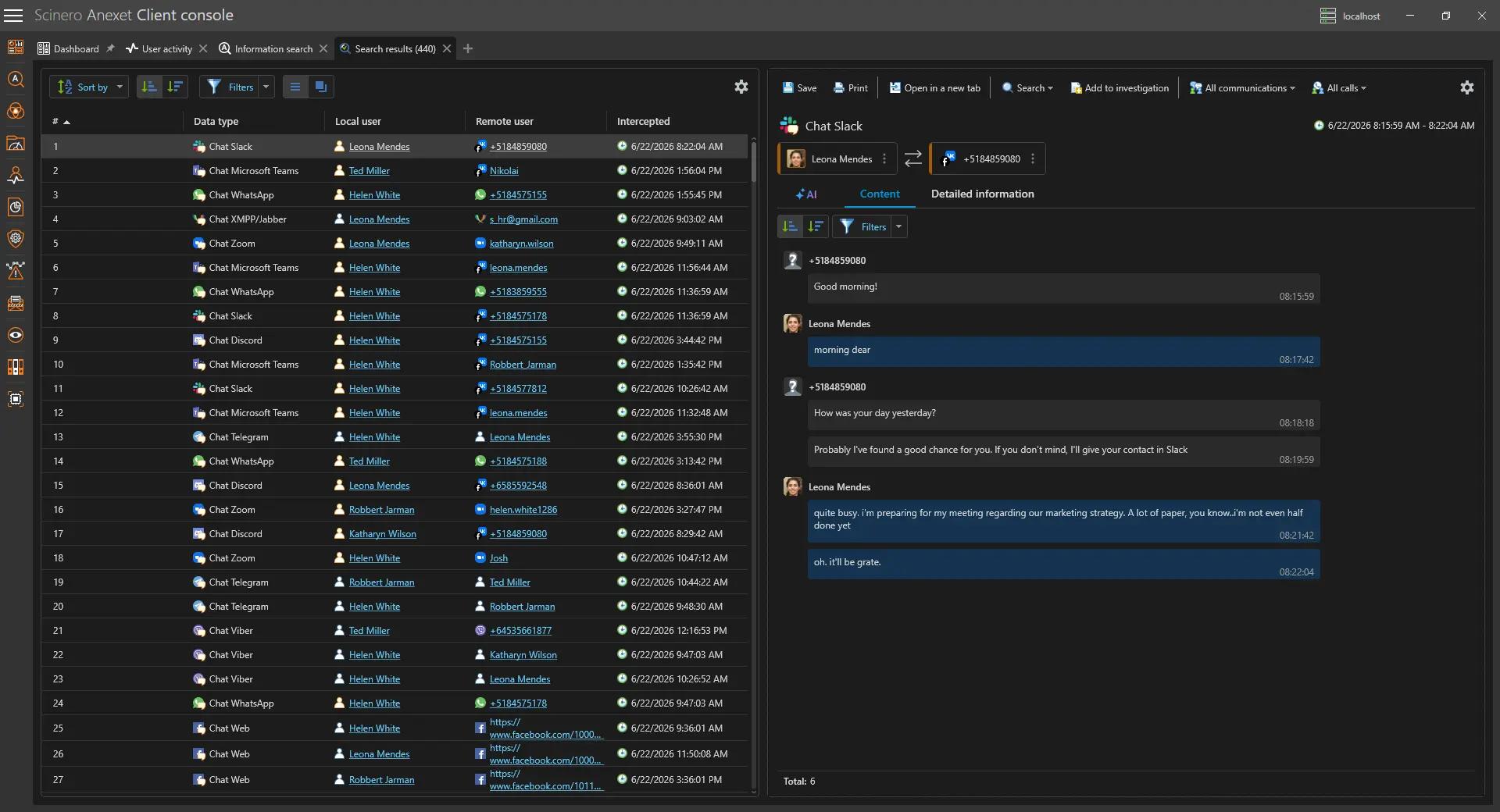
The concern is not that remote employees are dishonest. The concern is that off-network devices, unmanaged home or public Wi-Fi, and reduced daily contact create genuine blind spots for information security teams trying to detect unusual behavior, investigate incidents, or demonstrate compliance. A full day of idle time, a surge in personal-site visits, or a device suddenly showing up on an open coffee-shop network are all signals — and without an endpoint agent, they go unrecorded.
Remote work also raises a question on-site monitoring never had to answer: where is the device, and what is it connected to right now? Anexet's endpoint agent reports every Wi-Fi network it detects, with connection type and signal strength, so security teams can tell whether a laptop is on the corporate LAN, a home router, or an open network with a weak or unfamiliar signal. The same agent tracks the device's geographic location, flags movement away from its assigned site, and can be tied to a list of approved locations — turning 'is this laptop where it should be' from a guess into a recorded fact.
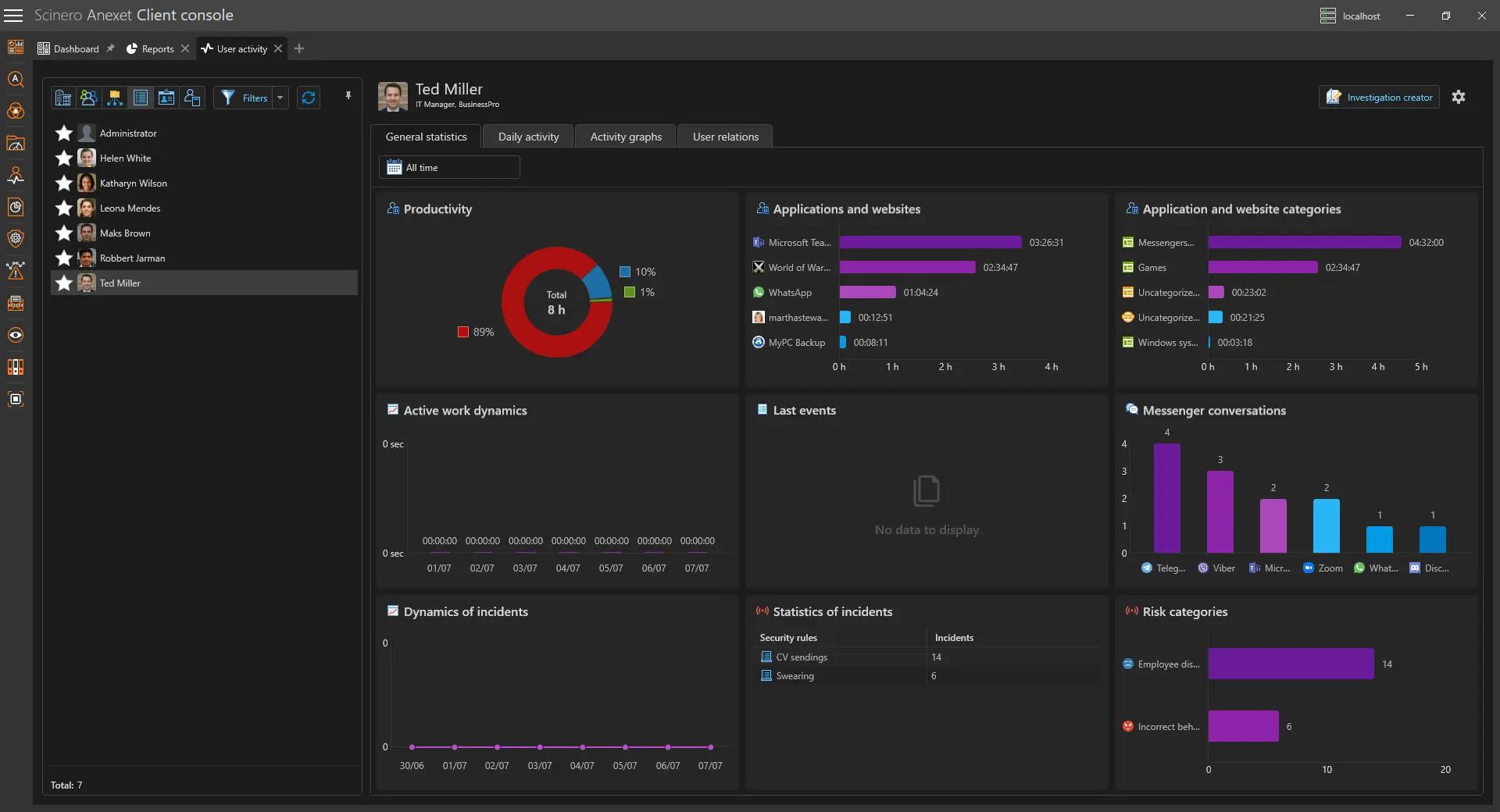
Managers and HR teams face a parallel challenge: how to evaluate remote employees fairly, distribute work objectively, and identify disengagement or burnout patterns without relying on anecdote. Work-time data tied to real application and website activity gives supervisors an objective baseline that protects employees and the business equally.
There is no separate 'remote mode' to switch on — the same endpoint agent, activity capture, productivity classification, Wi-Fi visibility, and location tracking that run for on-site staff continue running unchanged once a laptop leaves the office, because they operate at the OS level rather than depending on the corporate network.
Anexet's remote-employee monitoring addresses both audiences: the security team that needs an audit trail of where data and devices travel, and the manager who needs a fair, evidence-based view of how working time is actually spent.