Hardware Inventory with Serial Numbers

Anexet records every workstation, laptop, and server in your organization — including monitors, peripherals, CPUs, RAM modules, storage drives, and power supplies — capturing serial numbers for each component. Resource load (CPU, RAM, disk) is monitored live. The full hardware picture is available inside the Client Console. Hardware inventory is available in the Premium plan. Anexet is deployed on-premise; the vendor has no access to your data.

Schedule a Demo
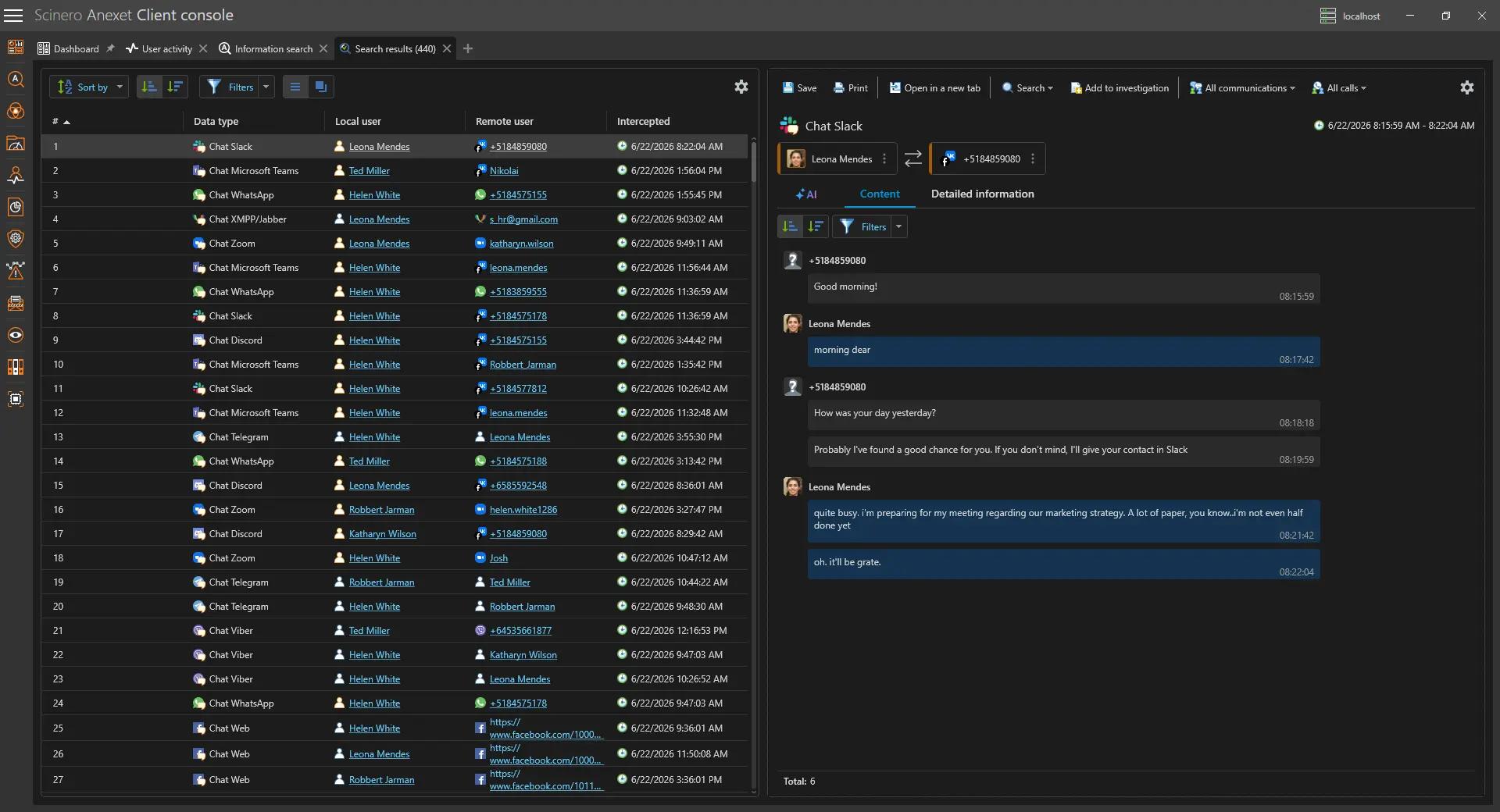
Anexet Client Console showing hardware inventory asset cards with serial numbers

The Hardware Record IT Teams Have Always Needed

Without a systematic hardware record — down to serial numbers — IT and security teams are working blind when they need to audit, investigate, or prove compliance.

Managing hardware across a distributed organization is harder than it looks. Devices change, components get swapped, and unofficial hardware quietly appears on the network. Without a systematic record — down to serial numbers — IT and security teams are working blind when they need to audit, investigate, or prove compliance.

Anexet builds and maintains that record automatically. Every monitored workstation continuously reports its hardware configuration back to your on-premise server. The result is a live, searchable registry of everything connected to your environment: the exact make and model, the serial number of every internal component, and the current load on each machine's resources.

Because all data is processed and stored inside your infrastructure, the inventory is a trust boundary of one: your organization. The vendor has no visibility into the records, and no third-party cloud is involved at any stage.

Why it matters

  • Serial numbers per component

    Every CPU, RAM module, storage drive, and PSU is recorded with its unique serial number — traceable across machines and ready for audits.

  • Live resource monitoring

    CPU utilization, RAM usage, and disk activity are tracked in real time, so the IT team sees overloaded or failing machines before users report problems.

  • Configuration compliance

    Any device that deviates from the approved hardware baseline triggers an automatic alert — rogue components and unauthorized swaps surface immediately.

What Anexet Inventories

The following items are captured and maintained in the Hardware & Software module, available on the Premium plan.

Devices & identifiers

  • Computers and servers

    Premium

    PCs, laptops, and servers — asset type, hostname, OS, and identifiers.

  • Serial numbers per component

    Premium

    Each CPU, RAM module, storage drive, and PSU carries its unique serial number in the record.

  • Peripheral devices

    Premium

    Monitors, multimedia hardware, keyboards, network adapters, and portable devices.

Monitoring & compliance

  • Resource-load monitoring

    Premium

    Real-time CPU utilization, RAM usage, and disk activity per workstation.

  • Configuration compliance

    Premium

    The system flags any device that does not match the approved hardware configuration — a rogue component triggers an alert.

  • Inoperative device detection

    Premium

    Workstations that stop reporting are marked automatically, so the helpdesk knows before the user calls.

Visibility & context

  • Office map view

    Premium

    Devices are pinned to a visual floor plan; selecting a machine opens its full hardware card and links directly to the user's activity monitoring timeline.

  • Software co-location

    Premium

    The same asset card shows installed software alongside the hardware specification, giving a single record per endpoint.

The exact scope of inventory features included in your deployment is confirmed during the demo. Pricing is always Price on Request.

Captured on the Endpoint, Stored in Your Infrastructure

The lightweight Anexet endpoint agent — already installed for activity monitoring and DLP — collects hardware configuration data during normal operation. Serial numbers, resource-load readings, and component-level detail are gathered continuously as a background task and sent to your on-premise Inventory Server, where they are stored in your internal database.

Because Anexet is fully on-premise, all hardware records stay within your internal network. The vendor has no access to your inventory data, no connection to your deployment, and no visibility into serial numbers, configuration baselines, or resource metrics — at any point.

Hardware asset card in the Anexet Client Console showing component serial numbers
Office map view with workstations pinned to a floor plan in Anexet

How Hardware Inventory Works

Four steps from endpoint agent to searchable, compliance-ready hardware record.

The lightweight Anexet endpoint agent — already installed for activity monitoring and DLP — collects hardware configuration data in the background. No additional agent or scanner is required.

1

Configuration records are sent to your on-premise Inventory Server and stored in your internal database, including device identifiers, component-level detail, serial numbers, and the most recent resource-load readings.

2

The Client Console compares each incoming record against your approved configuration baseline. Deviations — a new component, a missing drive, an unknown peripheral — are surfaced as alerts in the Hardware & Software module.

3

Security analysts and IT administrators view all asset records in a searchable, filterable inventory list or on the office map. Clicking any device opens a detailed card with full component history; a single click pivots to the user's activity monitoring timeline if an investigation requires it.

4

The lightweight Anexet endpoint agent — already installed for activity monitoring and DLP — collects hardware configuration data in the background. No additional agent or scanner is required.

1

Configuration records are sent to your on-premise Inventory Server and stored in your internal database, including device identifiers, component-level detail, serial numbers, and the most recent resource-load readings.

2

The Client Console compares each incoming record against your approved configuration baseline. Deviations — a new component, a missing drive, an unknown peripheral — are surfaced as alerts in the Hardware & Software module.

3

Security analysts and IT administrators view all asset records in a searchable, filterable inventory list or on the office map. Clicking any device opens a detailed card with full component history; a single click pivots to the user's activity monitoring timeline if an investigation requires it.

4

Arrow

Hardware Inventory by Plan

StandardCore employee activity monitoring.
Network traffic interception
USB control
Printers monitoring
Messengers interception
Browsers interception
and 4 more
Includes:
Anexet Activity
Most popular
AdvancedAdds DLP and deeper visibility.
Standard plan included
DLP features
Network shares monitoring
Keylogger
Webcam pictures
and 4 more
Includes:
Anexet DLP
Anexet Activity
All-in-one
PremiumAll-in-one solution.
Standard + Advanced plans included
Advanced search (digital fingerprints, hash search)
File systems monitoring
User relations analysis
Risk analysis
and 6 more
Includes:
Anexet DLP
Anexet Inventory
Anexet Activity
Anexet Ultimate

Frequently Asked Questions

Common questions about Anexet hardware inventory and asset tracking.

What does hardware inventory software track?

Hardware inventory software discovers and records the physical assets in your IT environment — computers, servers, and the components inside them (CPU, RAM, storage, PSU) — along with identifiers such as serial numbers. Anexet extends this with real-time resource-load data and alerts when the configuration deviates from an approved baseline.

Yes. Each CPU, RAM module, hard drive or SSD, and power supply is recorded with its serial number. This makes it possible to trace a specific component across machines, verify replacements, and produce evidence for audits without manual inspection of the hardware.

No. The Hardware & Software module — including component-level tracking, serial numbers, resource-load monitoring, and the office map — is exclusive to the Premium plan. Standard and Advanced cover activity monitoring and DLP respectively. Upgrade to Premium if hardware visibility is a requirement.

Yes. Anexet is deployed on-premise; the vendor has no access to your data. All collected hardware records, serial numbers, resource metrics, and configuration baselines are stored exclusively inside your own infrastructure. Scinero Software Limited has no connection to your deployment and no visibility into the inventory data.

No. Because Anexet is fully on-premise, all data — including the hardware inventory, serial numbers, and resource-load history — stays within your internal network. The vendor cannot access, view, or retrieve any of it.

Hardware inventory is part of the Premium plan. It is not available on Standard or Advanced. The exact scope of features included in your deployment is confirmed during the demo; pricing is always Price on Request.

No. The same lightweight endpoint agent that handles DLP and activity monitoring also collects hardware configuration data. There is no additional scanner or separate agent to deploy.

Three professionals collaborating and looking at a tablet in a meeting

Get a Complete Hardware Inventory for Your Fleet

Tell us about your environment — number of endpoints, operating systems, compliance requirements — and we will show you how Anexet Premium maps your full hardware estate, down to serial numbers, on-premise.

I accept that my personal data can be processed in accordance with the Privacy Policy