


Categories
Encryption, coding and hashing – what is the difference?
 23
23 12 min
All three terms – encryption, coding and hashing – are to some extent synonymous, but are still used in different ways. In this article, we will look at the differences and applications in detail.
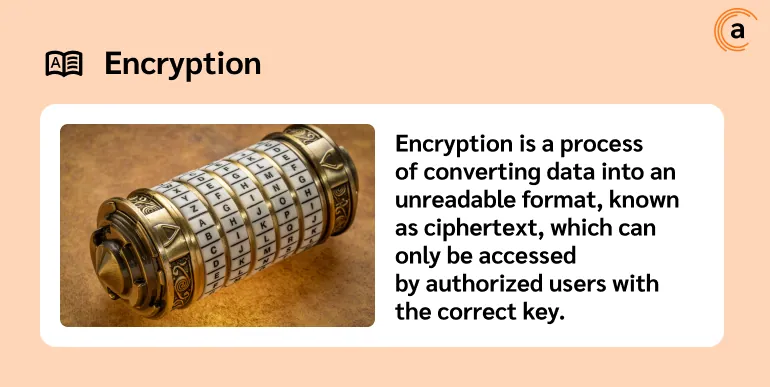
Encryption
Encryption is mainly used in relation to messengers and message encryption. The most common term nowadays is "end-to-end encryption". Essentially, encryption is a data encryption technique in which, for example, a message is encrypted with such an algorithm that only authorised users can access the information. Encryption is used when you want to send confidential data, such as a combination of login and password or other sensitive data.
In encryption, information can be encrypted using special algorithms – AES (Advanced Encryption Standard, a symmetric block encryption algorithm adopted as standard by the USA government, is one of the most popular encryption algorithms) and RSA (an abbreviation of Rivest, Shamir, Adleman, public-key cryptographic algorithm, the first algorithm suitable for both encryption and digital signatures). The encrypted information is called "ciphertext", that may be translated back to the source – "plain text», and vice versa – plain text is encrypted into ciphertext. There are two types of ciphertext algorithms – symmetric and asymmetric. In symmetric encryption, information is encrypted and decrypted using the same key; in asymmetric encryption, information is encrypted and decrypted using two keys, for example, one for encryption and one for decryption.
Coding
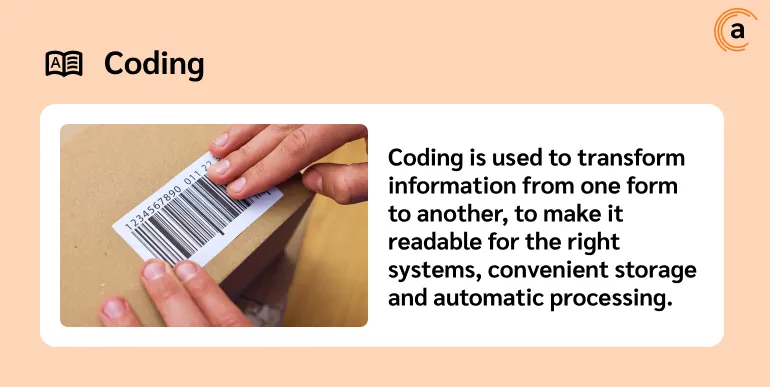
Coding is used to transform information from one form to another, to make it readable for the right systems, convenient storage and automatic processing. Encoding is not used to protect data, and encoding algorithms are often not unique. Encoding is used if, for example, you want to reduce the size of an audio or video file, each audio and video format has a corresponding encoding and decoding programme.
Coding has several areas: data compression, transport coding (additional coding for compatibility with data transmission protocols), cryptography (transforming information for confidential transmission), physical coding (transforming signals into data scale such as current amplitude), error detection and correction (controlling data integrity during playback). Examples of coding programmes include ASCII, BASE64, UNICODE, etc.
Hashing
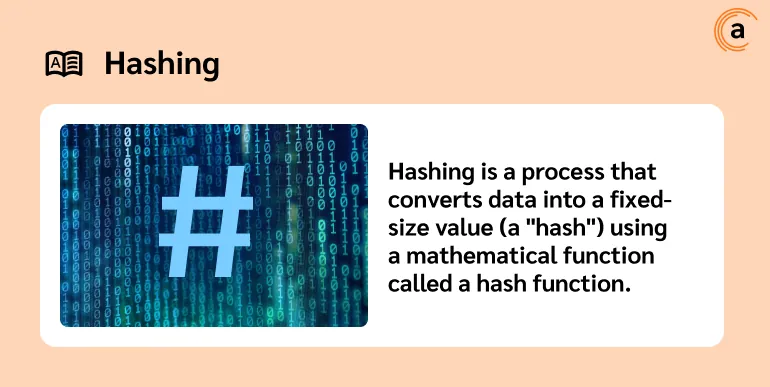
In hashing, information is converted to hash using hash functions. Hash function converts array of input data into bit string of specified length, performed by specific algorithm. That is, hashing is useful when you want to convert information of arbitrary size into information of certain size.
Hash functions are used to create unique identifiers for data sets, to store passwords in security systems as hash codes, to create electronic signatures, to search for duplicate data in large information arrays, and so on. The initial data in hashing is called a "key", and the result of transformation is called a "hash code".
There are many hashing algorithms according to the specifics of the problem to be solved, e.g. algorithms in terms of bit size, computational complexity or crypto-resistance.
Encryption and hashing to protect sensitive information
As we have already explained, encryption is not used to protect data, but merely to bring data sets into system-readable format and size. Encryption and hashing, on the contrary, are responsible for the safety of information during transmission and storage.
If we talk about storing and transmitting information in the workplace, of course, we can't avoid talking about the large amount of data that passes through employees' devices and the risks of sensitive information leaks. Employees who do not work in the company's Information Security department and, therefore, do not understand details of such protection methods as encryption or hashing, need a much more universal method of data protection. The reliable DLP system may provide comprehensive data protection.
For example, Anexet Ultimate DLP system can analyse data across multiple parameters, including the aforementioned hash functions. It also:
-
content analysis of files and documents by content;
-
analysis of text files and sent text (morphological peculiarities of the language are taken into account, text with grammatical errors or written in transliteration is analysed);
-
image analysis (recognition of text in images, seals, stamps);
-
analysis of voice messages and calls, speech recognition, analysis by added patterns/regular expressions (recognition of forwarded bank cards, passport photos, internal documents).
Also:
-
analysing common links between employees to identify ways of disseminating information;
-
analysing digital fingerprints;
-
recognising masked files;
-
analysis of CAD files and other functions.
After analysing the intercepted data, if there is violation of the security rule, the system automatically notifies the incident with all information about it.
Conclusion: thus, all three terms – encryption, coding and hashing – are used to convert data from one form to another for security of transmission or ease of recognition. However, it should be remembered that sensitive data can be protected by encryption or hashing. For reliability, especially of an organisation's data, it is better to resort to additional security measures in the form of the functional DLP system.